

Personalise your hearing experience with our apps
With our apps your patients can discreetly control and personalise their hearing experience – without having to fiddle with their hearing aids.
Relief App BeMore AppListening through hearing aids may feel strange at first – it can be a bit of a shock to the system to suddenly hear sounds you may not have heard for many years. When people first try hearing aids, or switch between types of hearing aids they often report the following:
The good news is that all of this settles over time as your brain gets used to hearing through the hearing aids. This happens as your brain learns to prioritise what you want to hear versus unimportant background noises.
The good news is that all of this settles over time as your brain gets used to hearing through the hearing aids. This happens as your brain learns to prioritise what you want to hear versus unimportant background noises. Your Audiologist may have described this as the ‘adjustment period’. This can take anywhere from a few weeks to six months, depending on how often you wear your hearing aids – the more you wear them, the quicker your brain will adjust.
Once you have adjusted to wearing them you will hear speech more clearly and find that listening becomes easier and less tiring. Many people also describe a richer hearing experience once they have hearing aids, as you are able to pick up pleasant environmental sounds, such as birdsong.
If you have hearing loss in both ears your Audiologist may recommend that you wear two hearing aids. This is because your ears work together to help you identify where sounds are coming from. Therefore, if you have two hearing aids it is important to wear both of them. If you chose to only have one hearing aid initially, consider asking for a second at your next follow-up appointment, as this will help sounds to feel balanced and more natural.
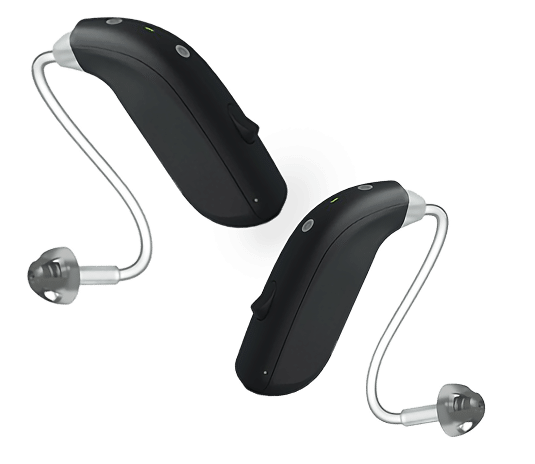
These have a tube or wire that sits inside your ear, with a dome or ear mould on the end. Taking these hearing aids in and out will become second nature over time, but can take a bit of practice at first. You may find it easier to sit in front of a mirror whilst you are learning. If you are unsure, it’s also a good idea to ask a someone to check you have your hearing aid in correctly before leaving home (to avoid it falling out and getting lost).

For best results, hearing aids should be worn all day, every day. It is not possible to wear hearing aids ‘too much’ during the day, but Audiologists recommend leaving them out over night to give your ears time to ventilate. If your hearing aids are rechargeable, this also gives them time to charge up!
Initially you may find it overwhelming to wear your hearing aids all day. Most people build up to this over a few weeks, slowing increasing the time they wear them each day. Everyone’s hearing loss is different, so it is important to do this at your own pace. Take breaks when you need to, rather than pushing yourself to wear them.
Another key consideration is where you are wearing your hearing aids. It is best to start off by using them in quiet places where you have control of the sound levels, such as at home. Over time, as you build confidence in using your hearing aids you can explore busier locations with higher noise levels. Generally, people find bustling shopping centres, restaurants, and bars the most challenging – so save these until last! Also consider the acoustics of places you visit – if there are lots of hard surfaces, sounds are more likely to echo. Venues with soft furnishings and fabrics absorb sound, so background noise doesn’t feel quite so overwhelming.
While you are still getting used to your hearing aids you may find it helpful to set alarms throughout the day to remind you to put them in. You could also ask family or friends to gently prompt you if they notice that you are not wearing them.
Once you’re wearing your hearing aids all day, some people find that keeping them next to your toiletries or glasses overnight helps you to get into the habit of putting them on as part of your usual morning routine. Be sure to wait until after you’ve showered and got ready though, as your hearing aids are not waterproof, and are very sensitive to cosmetics and perfumes!
Although you can’t stop the natural aging process, stimulating the areas of your brain that decode sound helps to keep them working well – hearing is a ‘use it or lose it’ sense. There is also evidence that wearing hearing aids can protect against anxiety and depression.






It is important to keep your hearing aids in tip top condition, so they provide high-quality sound. Although the outer shell of your hearing aid is designed to withstand a little wear and tear from everyday activities, it houses complex electronics which are more fragile.
Following a few simple dos and don’ts will protect the inner workings of your hearing aids, ensuring you get the best possible performance from them for years to come.
Do
Don’t
Turn off hearing aids when not in use and, if your devices use disposable batteries, remove the batteries when not in use for a long period of time.
danalogic Ambio Smart hearing aids stream phone calls directly into your hearing aids from a compatible smart device. If you prefer to hold the handset to your ear and have behind-the-ear hearing aids, ensure you hold the phone slightly away from your head so its at the top of your ear where the hearing aid microphones are. We have a guide on this with pictures on our support website. If you’re struggling to hear on the phone, even with your hearing aids, try video calling instead. Being able to see someone’s face means you will automatically lipread, even if you don’t know you’re doing it! There are lots of free online video calling services that you can use with a smartphone or computer. Find out more about using your phone with hearing aids here – How to use a telephone with your Danalogic hearing aids.
Keep sound quality high by replacing disposable components (e.g. tubing and domes) when they become stiff, brittle or discoloured. If your Audiologist provided spares, you can do this at home, otherwise you will need to visit your local Audiology service for help.
If you notice a change in your hearing contact your Audiology service and ask for a hearing test, as your hearing aids can be reprogrammed to support even minor changes to your hearing.

With our apps your patients can discreetly control and personalise their hearing experience – without having to fiddle with their hearing aids.
Relief App BeMore AppPotential causes
Hearing aid is off
Battery is missing or dead
Tubing, dome or ear mould is blocked
Tubing or dome have degraded (stiff/brittle/discoloured)
Body of hearing aid, tubing, receiver wire or ear mould is cracked or broken
Solutions you can try at home
Switch it on
Insert a new battery or recharge
Remove blockage with a cleaning rod if provided by your Audiologist
Replace with spares, if provided by your Audiologist
Contact your Audiology service
Potential causes
Hearing aid incorrectly inserted
Volume is too high
Something is blocking the microphone
Tubing, dome or ear mould is blocked
Your ear is blocked with wax
Solutions you can try at home
Remove and reinsert
Reduce volume slightly
Check hearing aid for wax/debris, and remove by gently wiping if covering the microphone vents
Remove blockage with a cleaning rod if provided by your Audiologist
Search online for local wax removal services
Potential causes
Hearing aid incorrectly inserted
Battery is very low or damaged
Tubing, dome or ear mould is blocked
Water damage
Your ear is blocked with wax
Your hearing may have changed
Solutions you can try at home
Remove and reinsert
Insert a new battery or recharge
Remove blockage with a cleaning rod if provided by your Audiologist
Leave hearing aid to dry fully
Search online for local wax removal services
Contact your Audiology service
Potential causes
Disposable battery powered hearing aid: battery old or faulty
Rechargeable hearing aid: battery or battery charger fault
Solutions you can try at home
Check the date on your spare batteries, if in date insert a new battery
Contact your Audiology service
Potential causes
Bluetooth switched off on linked device
Connection malfunction
Electronic fault in hearing aid
Solutions you can try at home
Turn on Bluetooth on linked device
Turn Bluetooth off and on again on linked device
Contact your Audiology service
Further information and how to guides and videos can be found in the Patient Portal. We also recommend using the LEA health app. It is free to download, is designed to be used by anyone with any level of hearing loss, and any type of hearing aid and serves a virtual companion – delivering tailored information and supporting people on their journey to better hearing. Find out more and download the app on leahealth.com.